
BSL-3 Laboratory Commissioning: An Acceptance Checklist
A BSL-3 laboratory is only as safe as its weakest system on the day it opens. Commissioning proves that the envelope, ventilation, controls, containment equipment and decontamination work — on their own, together, and when something fails. This checklist sets out what to verify, in what order, and what evidence to keep.
- Commissioning runs from design review through component checks and functional tests to integrated tests of the whole facility.
- The decisive tests are failure modes: what happens to room pressures when a fan, power supply or control fails.
- Exhaust HEPA filters are leak tested in place, and the housings must allow decontamination before filter change.
- Biosafety cabinets are certified after installation, in their final position and with the room HVAC running.
- Room decontamination is validated with biological indicators before the laboratory handles agents.
Commissioning stages
| Stage | What happens |
|---|---|
| Design review | Check that the design meets the applicable standard and the risk assessment: containment level, pressure cascade, HEPA locations, decontamination method. |
| Construction inspection | Inspect seals, penetrations, finishes, duct routing and equipment installation before ceilings and walls are closed. |
| Component tests | Test each system on its own: airtightness, HEPA filters, dampers, fans, alarms, autoclave, biosafety cabinets. |
| Integrated tests | Run the facility as a whole, including start-up, shutdown and failure scenarios. |
| Decontamination validation | Prove the room and equipment can be decontaminated. |
| Handover | Documents, training and a baseline for periodic recertification. |
National standards set the specific tests and limits — for example China’s GB 50346 lists the integrated performance tests required before a biosafety laboratory is accepted, and the Canadian Biosafety Standard sets performance and verification tests for each containment level. Build the commissioning plan from the standard that applies.
Checklist
1. Room envelope
- Walls, floor and ceiling continuous, sealed and cleanable; all penetrations sealed.
- Airtightness proven by the method the standard requires — see BSL-3 room airtightness testing.
- Room can be sealed for gaseous decontamination: dampers, doors, drains and pass-throughs.
2. Ventilation and pressure cascade
- Supply and exhaust airflows at design values.
- Directional airflow from the least to the most contaminated area confirmed with a visual method at each door.
- Pressure differences between rooms at design values and displayed at the entry.
- No recirculation of laboratory exhaust air to other areas.
3. Alarms, interlocks and failure modes
- Pressure and airflow alarms at the correct setpoints, with audible and visual signals inside and outside.
- Door interlocks prevent opening both doors of an airlock at the same time; emergency override works and is alarmed.
- Supply fan failure, exhaust fan failure, power failure and control system failure each tested: the laboratory must not become positive to surrounding areas and air must not reverse through doors.
- Switch-over to standby fans and emergency power tested, and the recovery to normal pressures recorded.
- Start-up and shutdown sequences tested so that pressure reversal does not happen when the system starts or stops.
4. Exhaust filtration
- Exhaust HEPA filters leak tested in place by scanning or the method the housing allows — see HEPA filter in-situ leak testing.
- Housings can be isolated and decontaminated before filter change; bag-in/bag-out or in-situ decontamination provisions work.
- Isolation dampers close tightly and are accessible for maintenance.
5. Primary containment equipment
- Biosafety cabinets certified after installation, in their final position, with the room HVAC running — inflow, downflow, filter integrity and airflow pattern.
- Cabinet exhaust connections (if ducted) balanced and alarmed.
- Centrifuges with sealed rotors or safety cups, and other containment devices, checked.
6. Waste and transfer
- Autoclave or other waste decontamination validated with the loads it will process, including biological indicators.
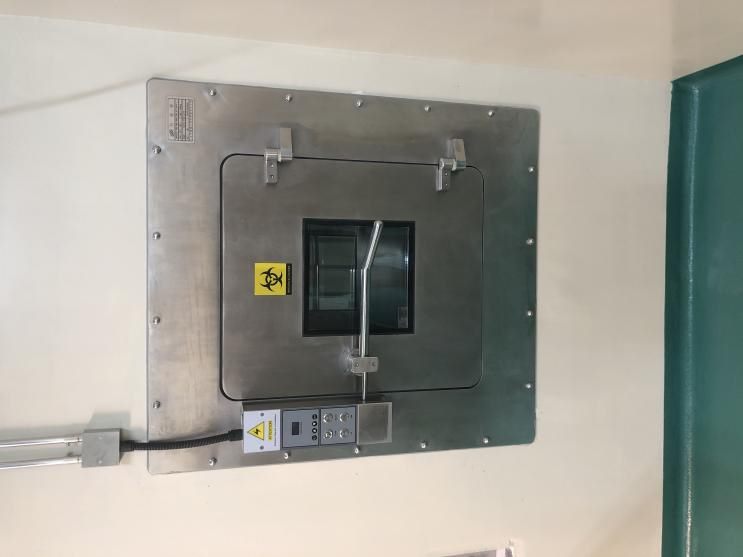
- Double-door autoclave and pass box interlocks work; seals at the barrier wall tested.
- Liquid effluent treatment, where the risk assessment requires it, validated.
7. Personnel areas and services
- Changing sequence, hand-wash and, where required, exit showers working as designed.
- Communication between the laboratory and outside, and emergency lighting.
- Utilities protected against backflow: vacuum lines with filters, water with backflow prevention.
8. Decontamination
- Room gaseous decontamination validated with biological indicators at worst-case locations, including inside equipment left in the room.
- Residual decontaminant measured before re-entry.
- Procedure, sealing points and safety controls documented — see preparing a room for VHP decontamination.
Evidence to keep
- Test protocols with acceptance criteria approved before testing.
- Raw data, instrument calibration certificates and tester qualifications.
- Deviations, corrective actions and retests.
- As-built drawings, control setpoints and alarm lists.
- A summary report that becomes the baseline for annual or periodic recertification.
Recertification
Most standards require the critical tests — airflow, pressures, alarms, failure modes, HEPA integrity and biosafety cabinet certification — to be repeated at least annually and after modifications. Keep the commissioning results as the reference so that drift can be seen.
References
GB 50346, Architectural and technical code for biosafety laboratories
GB 19489, Laboratories — General requirements for biosafety
Canadian Biosafety Standard, third edition
WHO Laboratory Biosafety Manual, fourth edition
EN 12469, Biotechnology — Performance criteria for microbiological safety cabinets
Fenggu equipment for this
Inflatable seal airtight door
Airtight door with inflatable seal for containment and decontamination rooms.
View specifications →FG-LOCK-BCVBiosafety isolation damper
Bubble-tight damper that isolates supply and exhaust ducts for room sealing and decontamination.
View specifications →FG-VHP-BIBOVHP BIBO sterilizer
Connects to the BIBO housing valve for enclosed volumes up to 30 m³; residual removed catalytically to ≤ 1 ppm.
View specifications →Related application guides: Biosafety laboratory decontamination · Cleanroom and room decontamination
Common questions
What is tested when commissioning a BSL-3 laboratory?
Room airtightness, airflows and directional airflow, the pressure cascade, alarms and interlocks, failure modes, exhaust HEPA integrity, biosafety cabinets, autoclave and waste treatment, and room decontamination.
What is a failure-mode test?
A test that deliberately stops a supply fan, an exhaust fan, the power supply or the controls to confirm the laboratory does not become positive to surrounding areas and air does not reverse through doors.
When are biosafety cabinets certified?
After installation in their final position with the room HVAC running, and then at least annually and after moving or repair.
How is BSL-3 room decontamination validated?
By running the gaseous decontamination cycle with biological indicators at worst-case locations, including inside equipment, and measuring residual decontaminant before re-entry.
How often is a BSL-3 laboratory recertified?
Most standards require the critical tests to be repeated at least annually and after any modification that could affect containment.
Have a specific space or load in mind?
Send the volume, the materials and what you need to prove. An engineer replies with a recommended setup and what validation will involve.
Prefer to talk directly?
WhatsApp +86 183 2145 9135[email protected]