
VHP Decontamination of Cleanrooms and Rooms
Shutdowns, changeovers, new-facility start-up and contamination events all call for a room-level sporicidal step. A mobile VHP generator treats the room as a sealed volume; the engineering work is in sealing, distribution and proving the result.
Why this needs a VHP step
Room surfaces, equipment exteriors and hard-to-reach areas need a reproducible sporicidal treatment that does not depend on how carefully someone wiped. Liquid disinfection leaves residues and misses areas; fogging liquid peroxide wets surfaces and is hard to distribute evenly.
VHP fills the sealed volume as a vapour, contacts every exposed surface, then is catalytically broken down to water and oxygen — leaving no residue to wipe off.
Equipment options
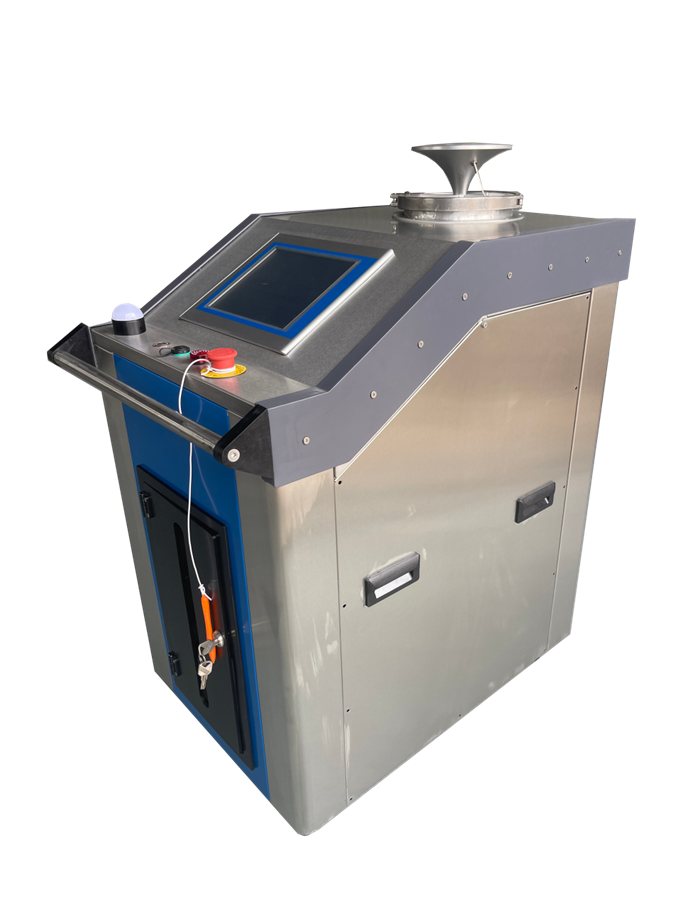
Mobile VHP room sterilizer
A wheeled unit for spaces up to 300 m³. Siemens PLC and touchscreen, scheduled and remote start, optional iPad control. Moves between rooms and sites.
View specifications →FG-VHP-C1000 / C2000HVAC-integrated system
For multi-room suites or when the ductwork itself must be treated, a fixed system that uses the air handling plant to distribute VHP is usually the better fit.
View specifications →Key specifications
| Mobile VHP room sterilizer (FG-VHP-M500) | |
|---|---|
| Treatment volume | ≤ 300 m³ |
| Injection rate | 1–40 g/min |
| Airflow | ≥ 500 m³/h |
| Dehumidification target | ≤ 50% RH |
| Vaporization temperature | ≤ 120 °C |
| Cycle time | Determined by validation for the space |
| Sporicidal efficacy | ≥ 6-log vs G. stearothermophilus (subject to validation) |
Figures from Fenggu product specifications. Cycle times and efficacy are confirmed by validation for your space and load.
What to plan for
Seal the volume first
Doors, cable and pipe penetrations, drains and ceiling grids all leak. Leaks reduce concentration inside and expose people outside. Tape or seal, and monitor H₂O₂ at the boundary during the cycle.
Isolate the HVAC
Supply and exhaust must be shut and dampered, or deliberately used for distribution. An uncontrolled air change dilutes the vapour and spreads it where it should not go.
Distribution beats dose
Corners, behind equipment and under benches are the usual failures. Fan placement, generator position and, for larger rooms, more than one injection point matter more than simply adding peroxide.
Avoid condensation
Cold surfaces and high humidity cause micro-condensation, which damages materials and makes kill rates unpredictable. Dehumidify first and keep the room temperature stable and uniform.
Prove it with BIs and CIs
Map the room with chemical indicators for distribution, then place biological indicators at worst-case locations to demonstrate the ≥ 6-log reduction for the qualified cycle.
Plan re-entry
Aerate until the room is below your site re-entry limit — commonly 1 ppm, the OSHA 8-hour exposure limit — and confirm with a calibrated sensor before anyone goes in.
Information an engineer will need
Having these ready makes the first recommendation specific instead of generic.
- Room volume (L × W × H) and layout
- Equipment and materials left in the room
- How the HVAC can be isolated or used
- Room temperature and typical humidity
- How often the room must be treated
- Target time from start to re-entry
Common questions
How many mobile units do I need?
One FG-VHP-M500 is specified for up to 300 m³. Larger or segmented spaces may need several units, extra distribution fans, or an HVAC-integrated system — distribution mapping decides.
Do I need to remove equipment from the room?
Usually not. VHP under controlled, non-condensing conditions is compatible with many materials and electronics, but compatibility should be confirmed for the specific items, and absorbent materials should be removed.
Is a mobile unit or a fixed system better?
Mobile suits occasional treatment of single rooms and use across several areas. Frequent treatment of a whole suite, or a need to treat ductwork, points to an HVAC-integrated system.
Tell us about your application
Send the volume, materials and what you need to achieve. An engineer reviews it and replies with a recommended setup and what validation will involve.