
VHP for Biosafety Labs, BSCs and BIBO Filter Housings
Before a contaminated HEPA filter is changed, a biosafety cabinet is serviced or a containment lab is handed over for maintenance, the air path and surfaces must be decontaminated — with the containment boundary still intact.
Why this needs a VHP step
In containment work the risk is the reverse of aseptic processing: the hazard is inside, and it must not reach the maintenance technician or the environment. Filters, ductwork and cabinet plenums collect the material that is hardest to clean by hand.
Connecting a VHP generator to the housing or cabinet treats the enclosed air path in place, so the filter can then be changed using the bag-in/bag-out procedure with a validated decontamination behind it.
Equipment options
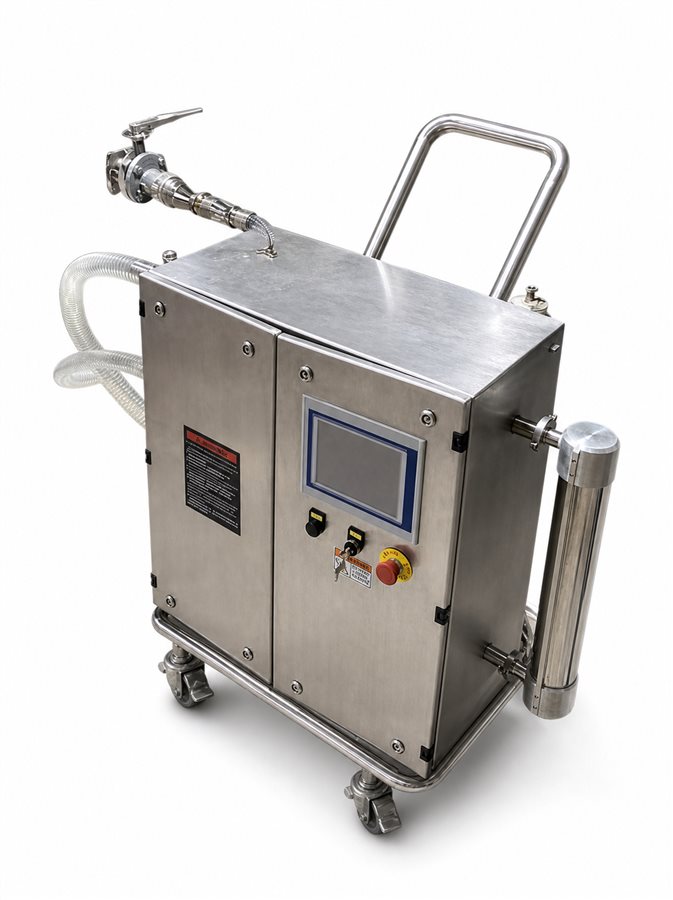
VHP BIBO sterilizer
Connects to the BIBO housing valve. Molecular-sieve dehumidification to < 30% RH, approx. 30 ppm for ~40 min, residual removed by palladium catalyst or the BIBO supply/exhaust system.
View specifications →FG-VHP-GLRecirculating VHP generator
Forms a closed loop with biosafety cabinets, centrifuges and other enclosed equipment through supply and return tubing.
View specifications →Key specifications
| BIBO sterilizer (FG-VHP-BIBO) | Recirculating generator (FG-VHP-GL) | |
|---|---|---|
| Treatment volume | ≤ 30 m³ | Enclosed equipment |
| Dehumidification | < 30% RH | < 50% RH space humidity |
| VHP concentration | approx. 30 ppm, ~40 min | 300–700 ppm |
| Residual | ≤ 1 ppm (catalytic) | ≤ 1 ppm |
| Dimensions | 640 × 836 × 1,036 mm | 600 × 600 × 1,100 mm |
| Sporicidal efficacy | ≥ 6-log (subject to validation) | ≥ 6-log (subject to validation) |
Figures from Fenggu product specifications. Cycle times and efficacy are confirmed by validation for your space and load.
What to plan for
Keep containment during the cycle
Plan how the housing or cabinet stays negative or sealed while vapour is injected and recirculated, and where any exhaust goes.
Gas-tight isolation
Bubble-tight dampers or valves upstream and downstream of the filter define the treated volume. Without them, vapour escapes into the duct system and concentration is lost.
Indicators on both filter faces
Place biological indicators on the upstream (dirty) face and downstream side of the filter, and in the housing corners, to prove the air path — not just the open volume.
Filter media takes up peroxide
HEPA media and gaskets absorb vapour, which slows the rise to target concentration and extends aeration. Allow for it in cycle development.
Document the hand-over
Record the cycle, BI results and residual reading as part of the maintenance permit, so the technician starts work with evidence the system is safe.
Information an engineer will need
Having these ready makes the first recommendation specific instead of generic.
- Housing or cabinet type and volume
- Connection points (valves, test ports)
- Isolation damper arrangement
- Biological agents handled (risk group)
- How exhaust is managed during the cycle
- Maintenance and filter-change frequency
Common questions
Does the filter have to be removed before decontamination?
No. The point of in-situ decontamination is to treat the filter while it is still sealed in the housing, then change it.
Can the same generator treat a whole BSL-3 lab?
A BIBO sterilizer is sized for housings and enclosed volumes up to 30 m³. Whole rooms are usually treated with a mobile room unit or an HVAC-integrated system.
How is the cycle proven?
With biological indicators, typically Geobacillus stearothermophilus spore carriers, placed at worst-case locations, and a residual measurement before the housing is opened.
Tell us about your application
Send the volume, materials and what you need to achieve. An engineer reviews it and replies with a recommended setup and what validation will involve.