
VHP in Cell and Gene Therapy Manufacturing
Cell therapies cannot be terminally sterilised, and each batch is often a single patient. Decontamination between batches has to be reliable, fast enough for the schedule, and leave nothing behind that could harm living cells.
Why this needs a VHP step
Open manipulations, frequent changeovers and many products in one facility make cross-contamination the central risk. Every batch change needs a documented decontamination of the closed processing environment.
Hydrogen peroxide is effective and leaves only water and oxygen, but cells are sensitive to oxidative stress. The aeration end-point and the materials left in the chamber matter more here than in most applications.
Equipment options
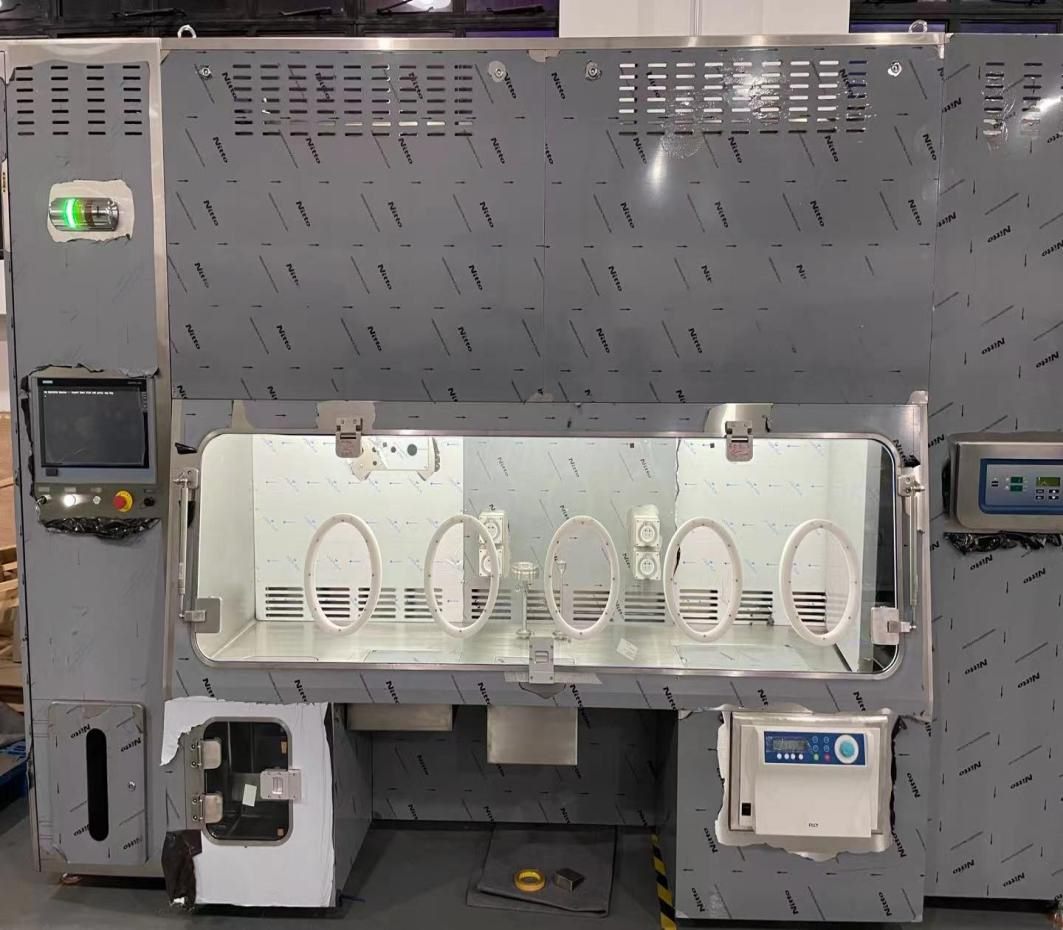
Cell processing isolator
Closed Grade A environment integrating centrifugation and CO₂ incubation, with dry VHP decontamination between processes and temperature control during the cycle. DQ, IQ, OQ and PQ support, including VHP culture-vessel penetration confirmation.
View specifications →FG-PB-VHPVHP pass box
Decontaminates the outside of consumables and reagent containers as they enter the processing area.
View specifications →What to plan for
Set the residual target from the cells
Operator-safety limits are not the right end-point when cells follow. Define an acceptable residual for the process and confirm the aeration time reaches it with the real load.
Plastics hold peroxide
Single-use bags, tubing and culture vessels absorb and slowly release H₂O₂. Decide what stays in the chamber during the cycle and what comes in afterwards through a transfer device.
Temperature during the cycle
Cycle temperature should not stress incubators or equipment inside the isolator. Temperature control during the cycle is part of the specification.
Changeover time is a capacity limit
With single-patient batches, the decontamination cycle often sets how many batches a line can run. Optimise aeration with the real load early.
Segregation between products
Separate micro-environments and docking incubators help keep different cell lines apart. Include each configuration in the qualification.
Information an engineer will need
Having these ready makes the first recommendation specific instead of generic.
- Process steps inside the isolator
- Single-use materials present during the cycle
- Batches per week and changeover window
- Acceptable residual for the process
- Incubators and equipment to integrate
- Regulatory market (FDA, EMA, NMPA)
Common questions
Will VHP residue harm my cells?
Hydrogen peroxide breaks down to water and oxygen, but low residual levels can affect sensitive cells. The aeration end-point should be set for the process and confirmed with the actual load.
Can culture vessels stay in the isolator during the cycle?
Only if penetration and residual behaviour have been confirmed for that vessel. Fenggu supports VHP culture-vessel penetration confirmation as part of validation.
How long is the changeover?
It depends on chamber volume, load and the residual target. It is fixed during cycle development — measure it early because it limits batch throughput.
Tell us about your application
Send the volume, materials and what you need to achieve. An engineer reviews it and replies with a recommended setup and what validation will involve.